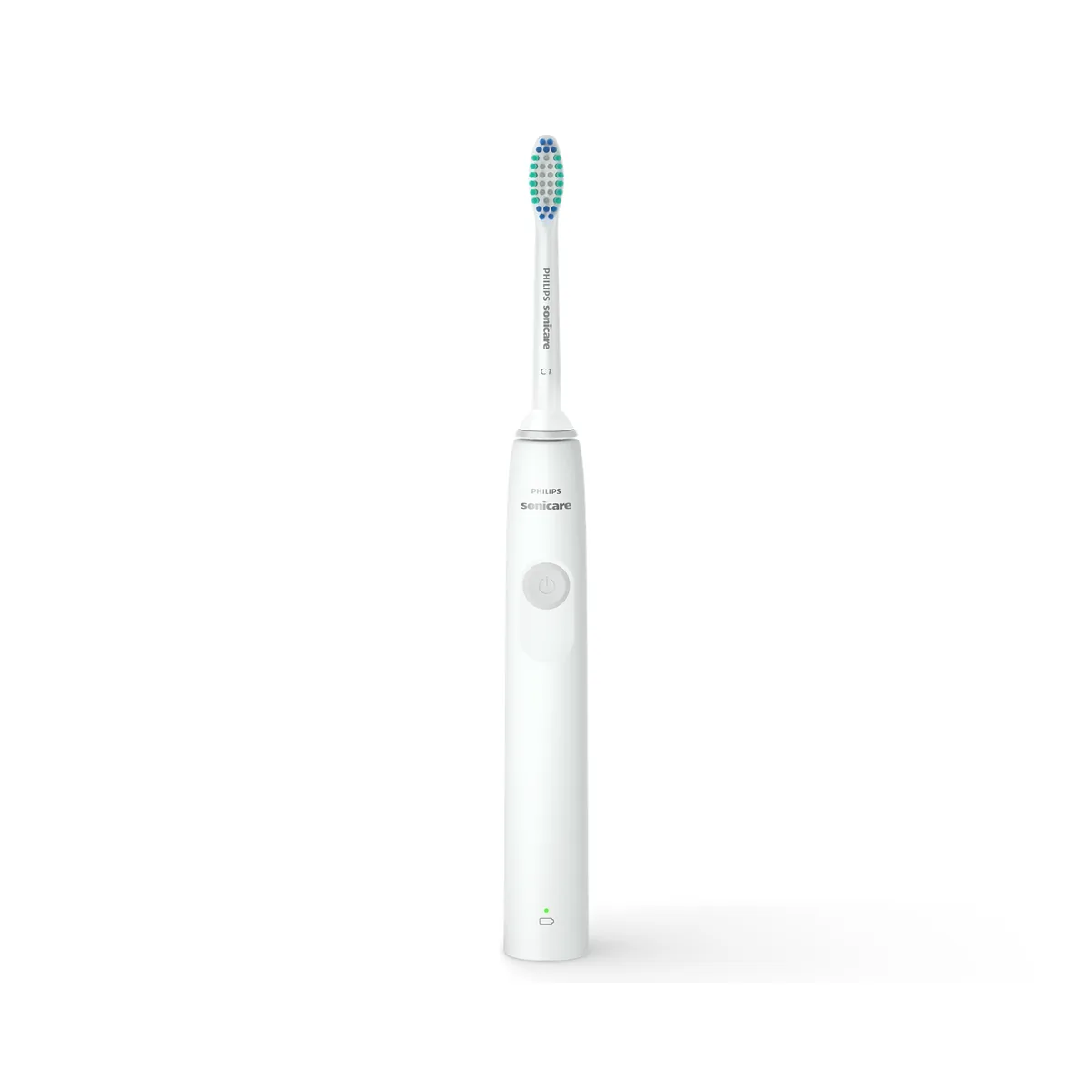
Philips Sonicare~$20
Philips Sonicare 1100
Sonic
No pressure sensor listed
- 3-year cost
- ~$93
- Price per head
- $6.66
- Battery
- 14-day battery
- $20 handle
- 2-week battery
- Click-on heads
Best for: The cheapest way onto Sonicare's click-on heads
Short answer
Modestly, on average. A 2014 Cochrane review of 56 trials found powered brushes reduced plaque and gum inflammation a little more than manual ones, and called the clinical importance unclear. The ADA says both kinds are effective at removing plaque.
The strongest summary of the evidence is a Cochrane systematic review (Yaacob and colleagues, 2014), which pooled randomised trials comparing powered and manual brushing. It looked at 56 trials, 51 of which, with 4,624 participants, supplied data for the analysis.
Compared with manual brushing, powered brushing was associated with an 11% reduction in plaque at one to three months and 21% after three months, and a 6% reduction in gingivitis (gum inflammation) at one to three months and 11% after three months. The authors rated that evidence as moderate quality.
The same review says the clinical importance of those differences remains unclear: a percentage reduction in a plaque index is not the same thing as fewer cavities or less tooth loss, and the trials were mostly short. Cost, reliability and side effects were reported inconsistently, so the review could not weigh them.
It also does not say a powered brush will help any one person. Technique, time and flossing all matter, and a careful manual brusher is not doing something wrong. The ADA's own guidance is that both manual and powered brushes are effective at removing plaque, and that people with limited dexterity, children, and people with braces may find a powered brush easier to use.
If an electric brush makes two minutes easier to stick to, the timers and pacers on nearly every model here are the practical reason to buy one. If cost is the worry, the cheapest to own in this catalog comes to about $43 over three years including heads; the most expensive, about $453.
Maker claims quoted on this page are the maker’s own and are labelled as such. This page is general information, not dental or medical advice.
Sonic
Best for: The cheapest way onto Sonicare's click-on heads
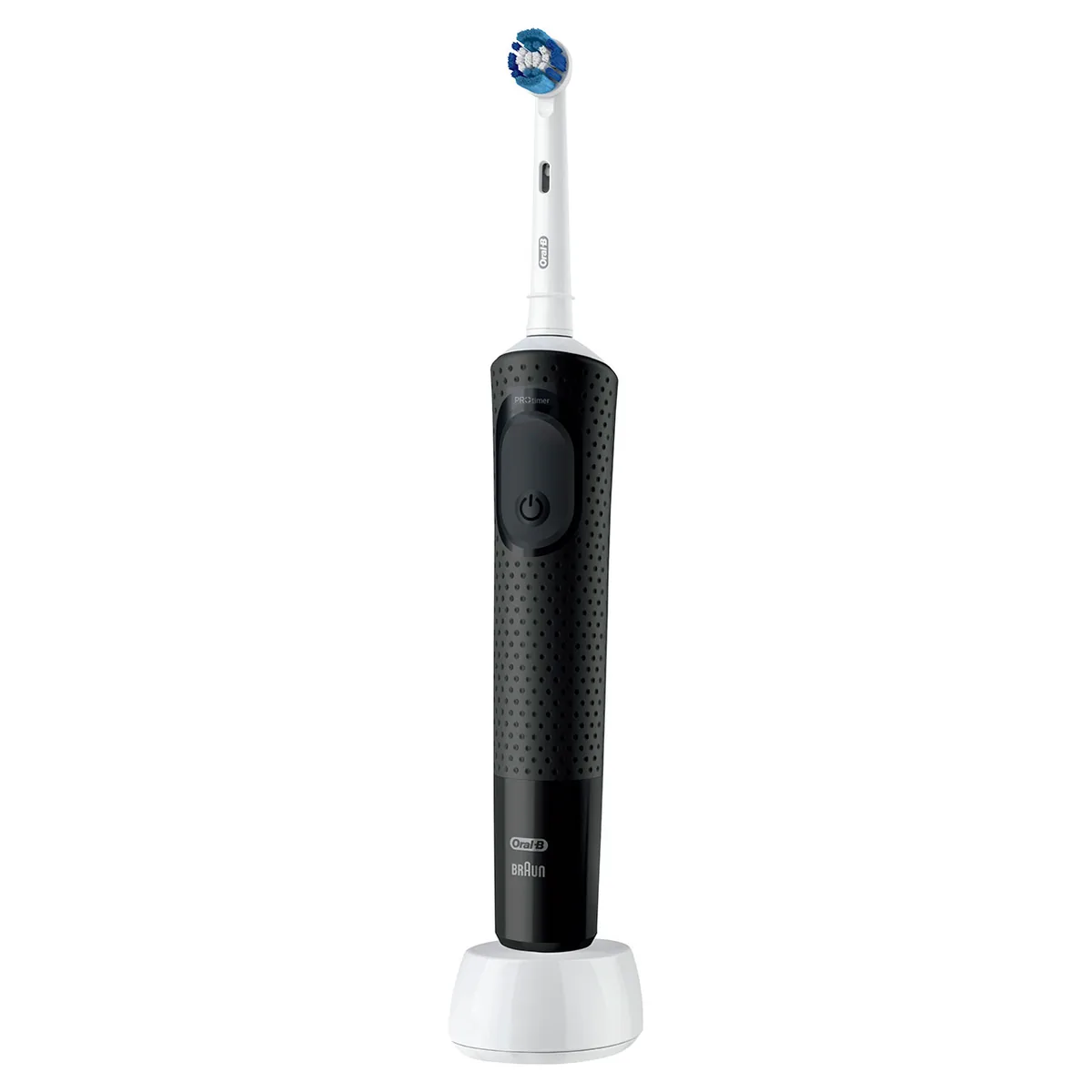
Oscillating-rotating
Best for: A basic rechargeable for a second bathroom or a teenager
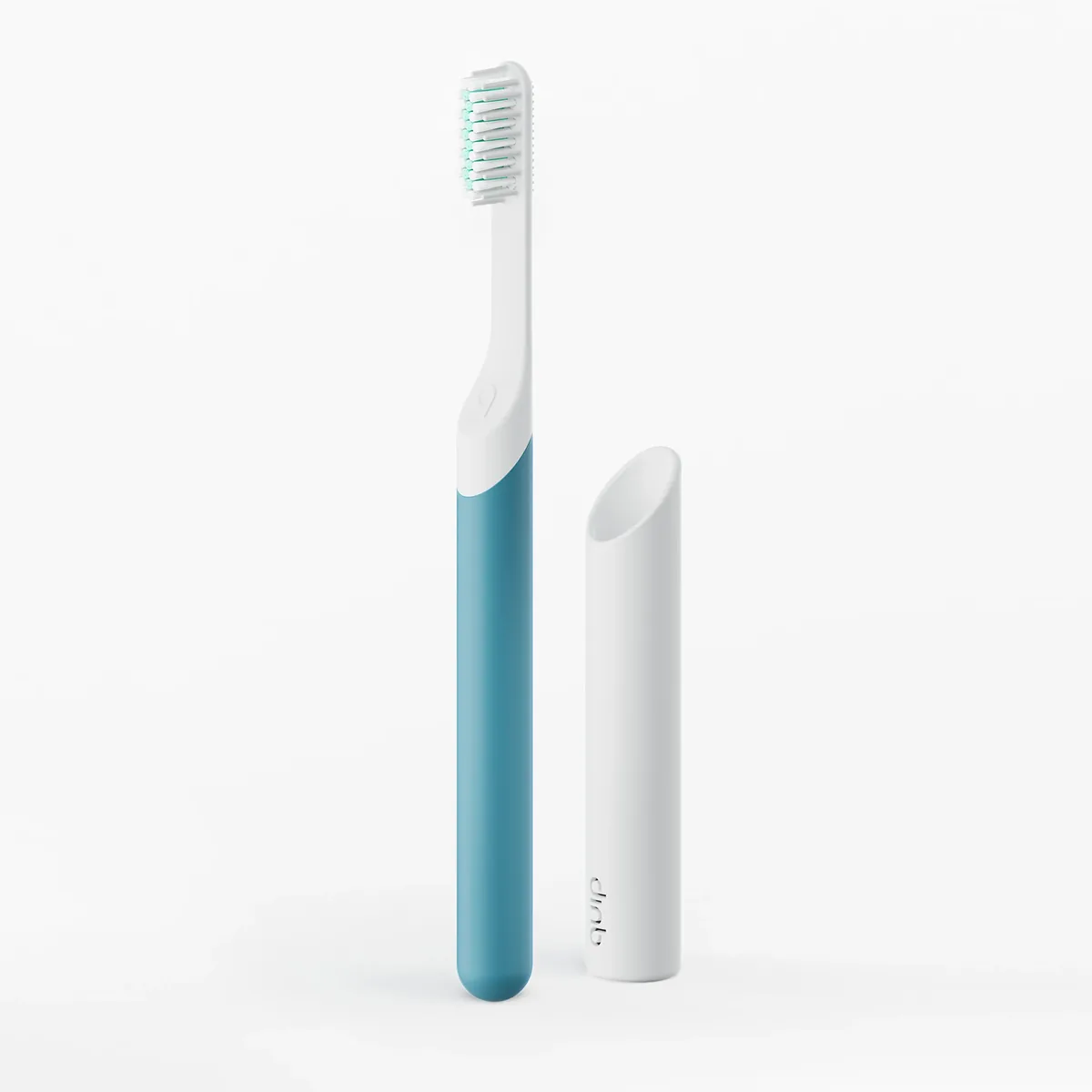
Battery & slim
Best for: A light, charger-free brush for someone who scrubs like it's manual
A 2010 Cochrane review found rotation-oscillation brushes reduced plaque and gingivitis slightly more than side-to-side brushes in the short term, but the difference was small, its clinical importance unclear, and there were too few trials of other designs to rank them.
It tells you when you are pressing harder than the maker intends, by a light, a vibration or both. 24 of the 53 brushes here list one. It is a feedback feature, not a treatment, and makers do not publish the force at which theirs trips.
Every specification explained, with the real numbers from the catalog behind each one.