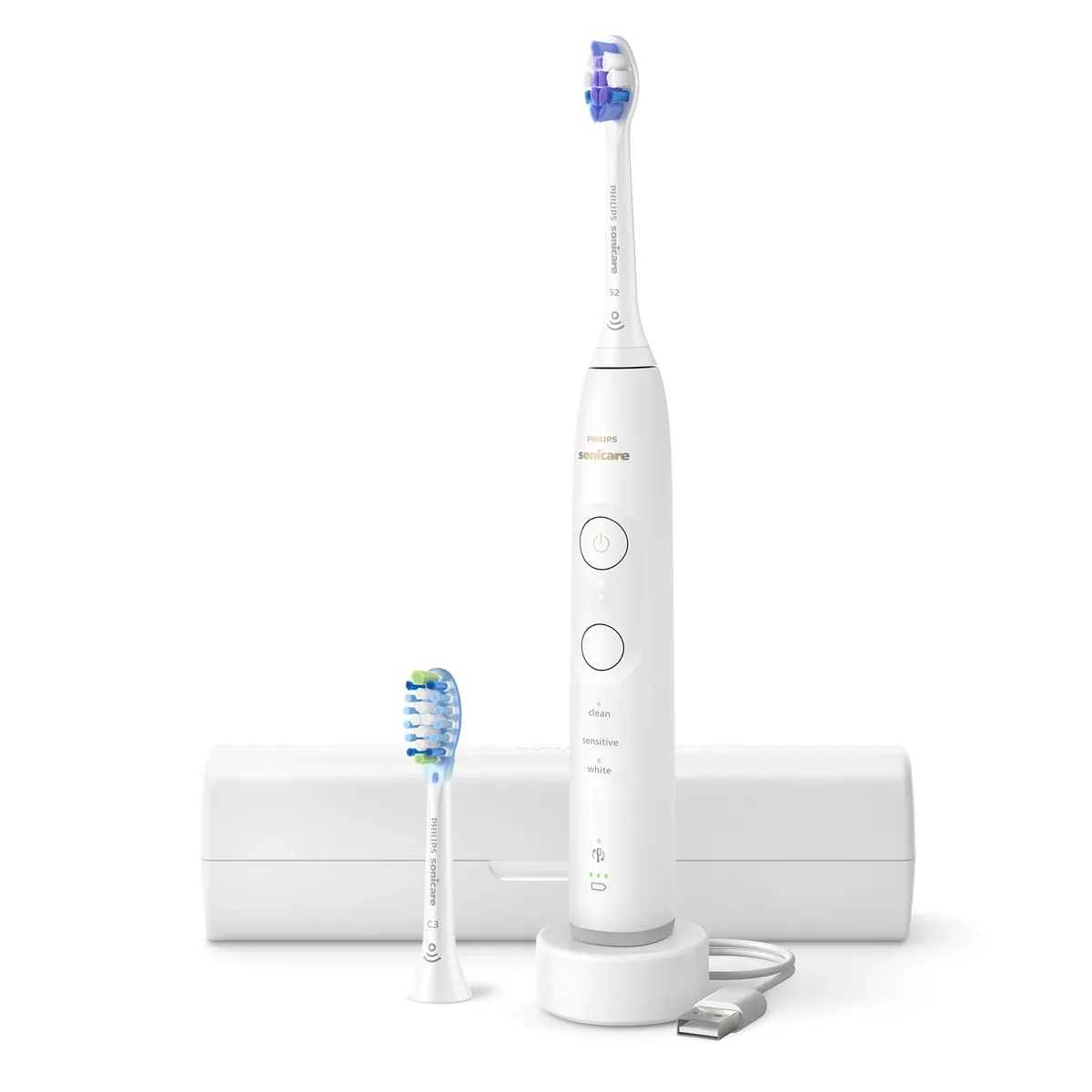
Oral-B iO Series 5
Oscillating-rotating
- 3-year cost
- ~$199
- Price per head
- $7.22
- Battery
- not published
- 5 modes
- Real-time app tracking
- Travel case
Best for: People who want Intense and Super Sensitive modes on one handle
Short answer
A 2010 Cochrane review found rotation-oscillation brushes reduced plaque and gingivitis slightly more than side-to-side brushes in the short term, but the difference was small, its clinical importance unclear, and there were too few trials of other designs to rank them.
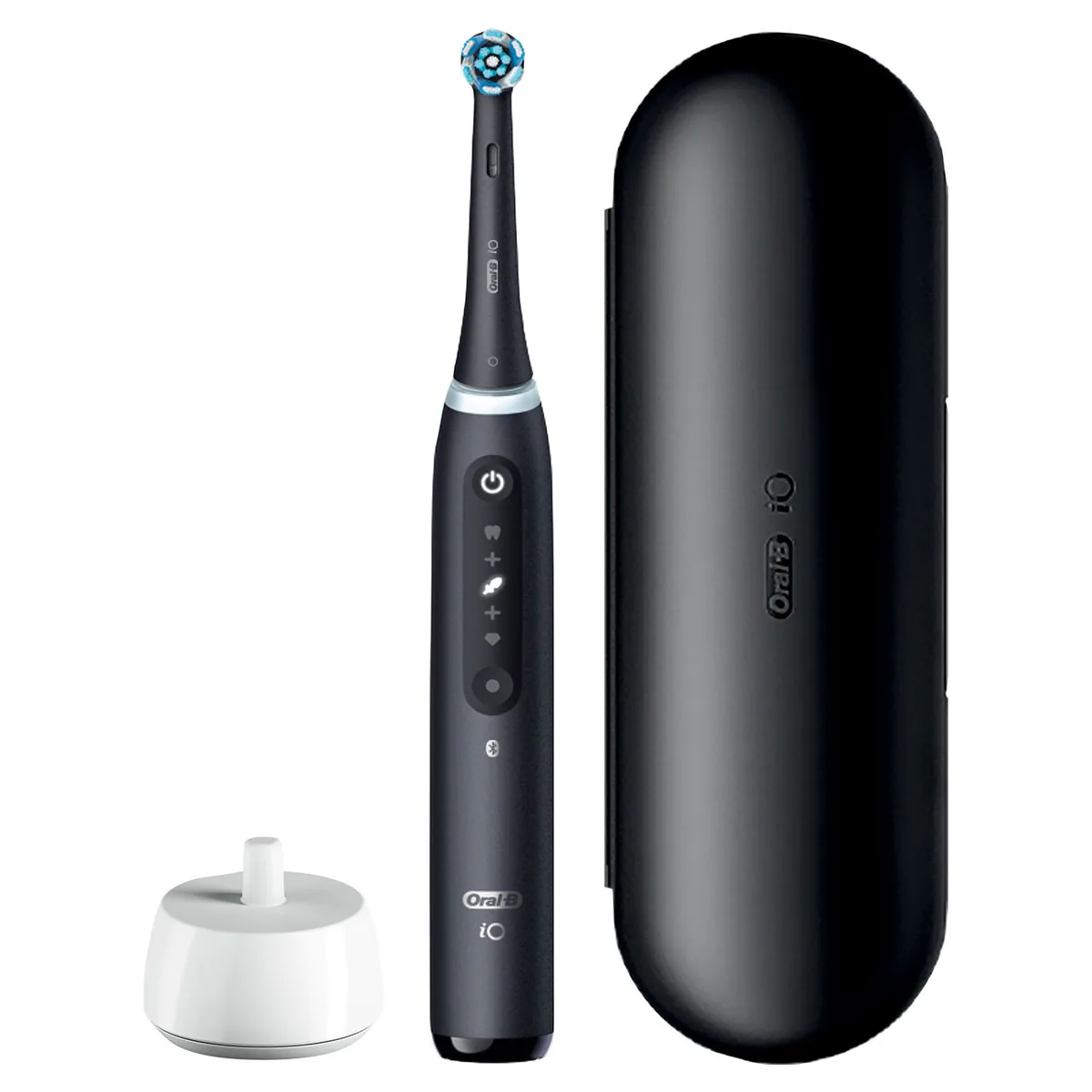
Oscillating-rotating brushes (12 in this catalog, mostly Oral-B) use a small round head that turns back and forth on each tooth; you move it slowly from tooth to tooth. Sonic brushes (37 here) vibrate an elongated head side to side at high frequency; you hold it at the gumline and sweep. Laifen's Wave models add an oscillating sweep to a sonic motor.
Cochrane's review of different powered toothbrushes (Deacon and colleagues, 2010) pooled 17 trials with 1,369 participants. Brushes with a rotation-oscillation action reduced plaque and gingivitis more than those with a side-to-side action in the short term. The authors describe the difference as small and its clinical importance as unclear, and say that because few trials tested other kinds of powered brush, no other conclusions about one type being superior could be drawn.
The 2014 review of powered against manual brushing reached a related finding: the largest body of evidence was for rotation-oscillation brushes, which showed a statistically significant reduction in plaque and gingivitis at both time points it examined. That reflects how much research exists for each design as much as how well each works.
Makers quote speed in their own units: Philips counts "brush movements", Oclean "movements", AquaSonic "vibrations", quip "oscillations". 26 of the 53 brushes here publish a figure, and the highest is the Oclean X Pro Elite at 84,000 movements/min. A sonic vibration and an oscillation are different motions, so this site never ranks across units or converts one into another. Oral-B publishes no speed for its US iO range at all.
In practice the design you will use properly for two minutes matters more than the design. If you like the feel of a round head polishing one tooth at a time, oscillating suits; if you prefer a broad head swept along the gumline, sonic does.
Maker claims quoted on this page are the maker’s own and are labelled as such. This page is general information, not dental or medical advice.

Oscillating-rotating
Best for: People who want Intense and Super Sensitive modes on one handle

Sonic
Best for: App tracking and a visible pressure warning on the 62,000 motor
Sonic
Best for: Someone torn between sonic and oscillating
Modestly, on average. A 2014 Cochrane review of 56 trials found powered brushes reduced plaque and gum inflammation a little more than manual ones, and called the clinical importance unclear. The ADA says both kinds are effective at removing plaque.
It tells you when you are pressing harder than the maker intends, by a light, a vibration or both. 24 of the 53 brushes here list one. It is a feedback feature, not a treatment, and makers do not publish the force at which theirs trips.
Every specification explained, with the real numbers from the catalog behind each one.