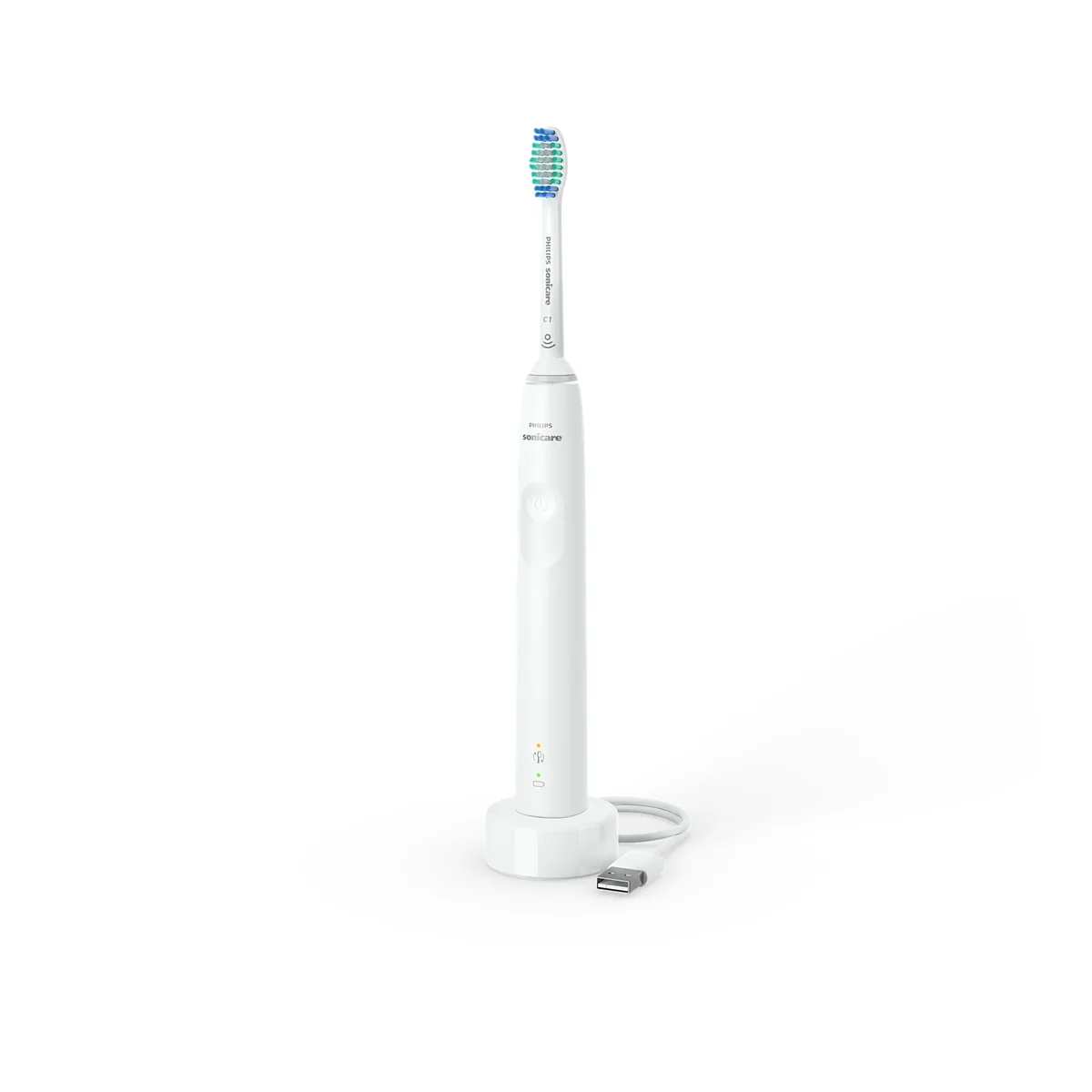
Philips Sonicare~$40
Philips Sonicare 3100
Sonic
Pressure sensor
- 3-year cost
- ~$113
- Price per head
- $6.66
- Battery
- 14-day battery
- Pressure sensor
- 2-week battery
- $40 handle
Best for: A Sonicare pressure sensor at the lowest price
Short answer
It tells you when you are pressing harder than the maker intends, by a light, a vibration or both. 24 of the 53 brushes here list one. It is a feedback feature, not a treatment, and makers do not publish the force at which theirs trips.
Makers describe four approaches. A warning light (usually red) when you press too hard. A haptic signal: the handle vibrates, pulses or makes a sound, and on some Oral-B models the motor slows. A multi-signal sensor, which this site calls smart: a light plus vibration, a three-state light that also shows too soft and just right (Oral-B's iO), or, on Philips' Prestige 9900, SenseIQ, which Philips says adjusts the brushing automatically as pressure and motion change. And some makers list a pressure sensor without saying how it signals.
| Sensor, as the maker describes it | Brushes | Brands |
|---|---|---|
| Multi-signal pressure sensor | 16 | Oral-B, Philips Sonicare, quip, Laifen |
| Pressure sensor (vibration or sound) | 4 | Philips Sonicare |
| Pressure sensor (signal not described) | 4 | Oral-B, Philips Sonicare, BURST |
| No pressure sensor | 5 | Philips Sonicare |
| Not listed by the maker | 24 | Oral-B, quip, BURST, Oclean, Laifen, Waterpik, Snow, AquaSonic |
No maker in this catalog publishes the force threshold its sensor uses, so two sensors cannot be compared on sensitivity. None claims a sensor prevents gum recession or any other condition, and this site doesn't either. What a sensor does is give you a signal you would otherwise not get; whether that changes how you brush is up to you.
People who were told by a dentist that they brush too hard are the obvious audience. A light you can see in a mirror is easier to notice than a vibration you might mistake for the motor's normal feel.
Maker claims quoted on this page are the maker’s own and are labelled as such. This page is general information, not dental or medical advice.
Sonic
Best for: A Sonicare pressure sensor at the lowest price
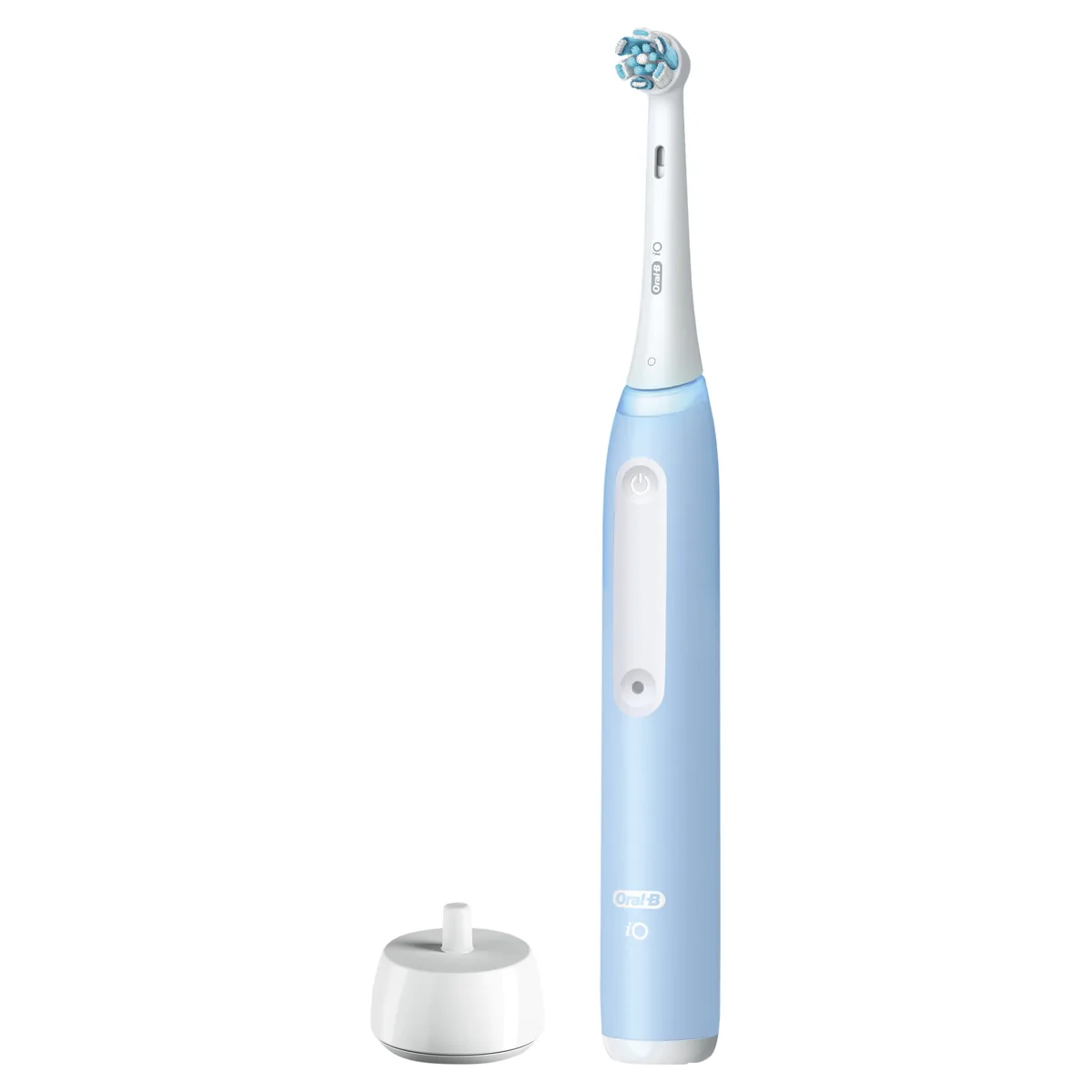
Oscillating-rotating
Best for: The cheapest way into the iO head and pressure light
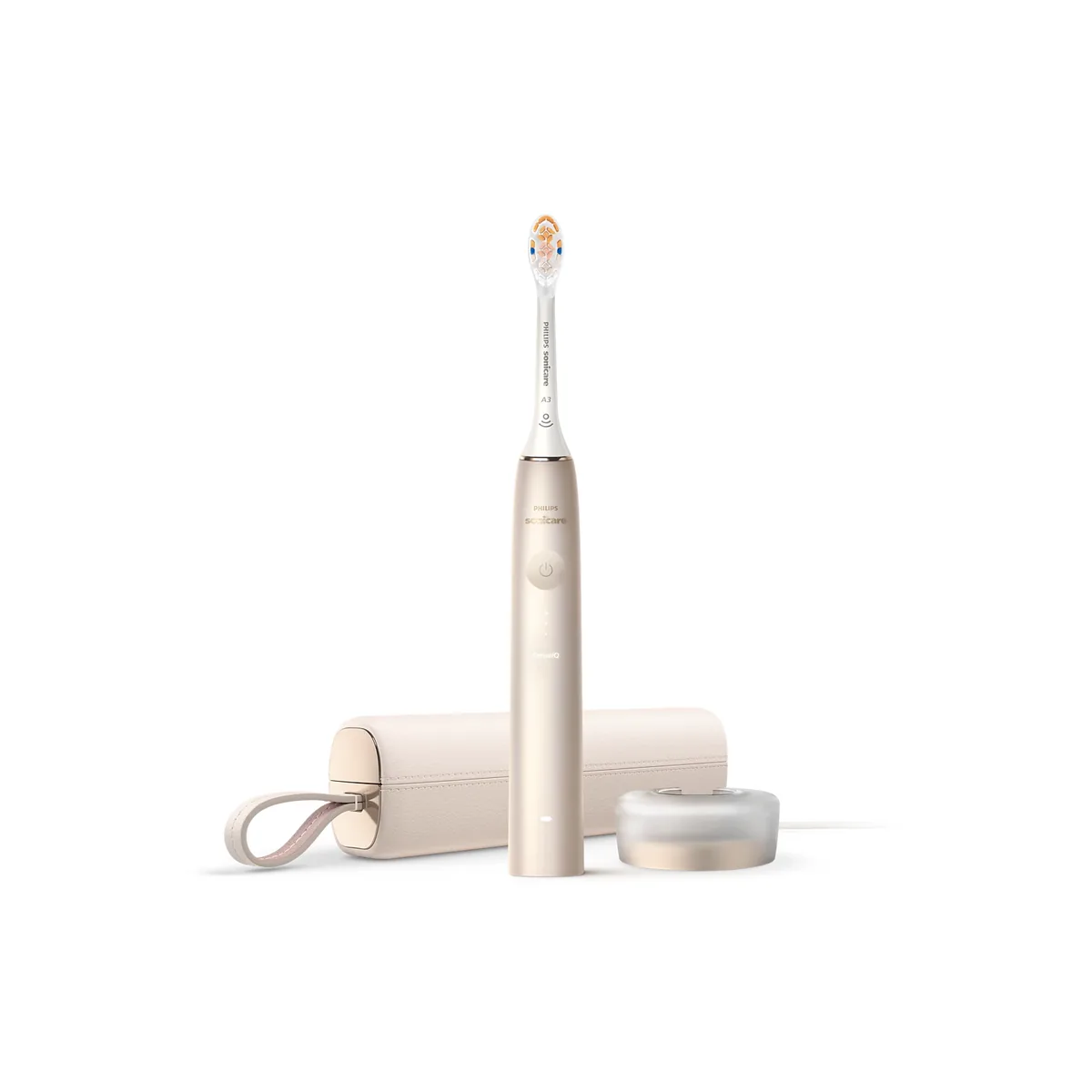
Sonic
Best for: Someone who wants the brush to adjust itself to pressure and motion
The ADA notes that people with dental appliances such as braces may find a powered brush easier to use. The features that match the usual advice are a pressure sensor and a gentle mode. Your orthodontist or dentist decides what is right for your appliance; this site does not.
It means the ADA's Council on Scientific Affairs reviewed evidence the maker submitted and found the product safe and effective for what the listing says, typically removing plaque and helping to prevent and reduce gingivitis. It is awarded per product. 14 of the 53 brushes here have a live listing on the ADA's own search.
Every specification explained, with the real numbers from the catalog behind each one.